Your Hair Deserves Better: The Turkish Keratin Difference American Salons Haven't Caught Up To
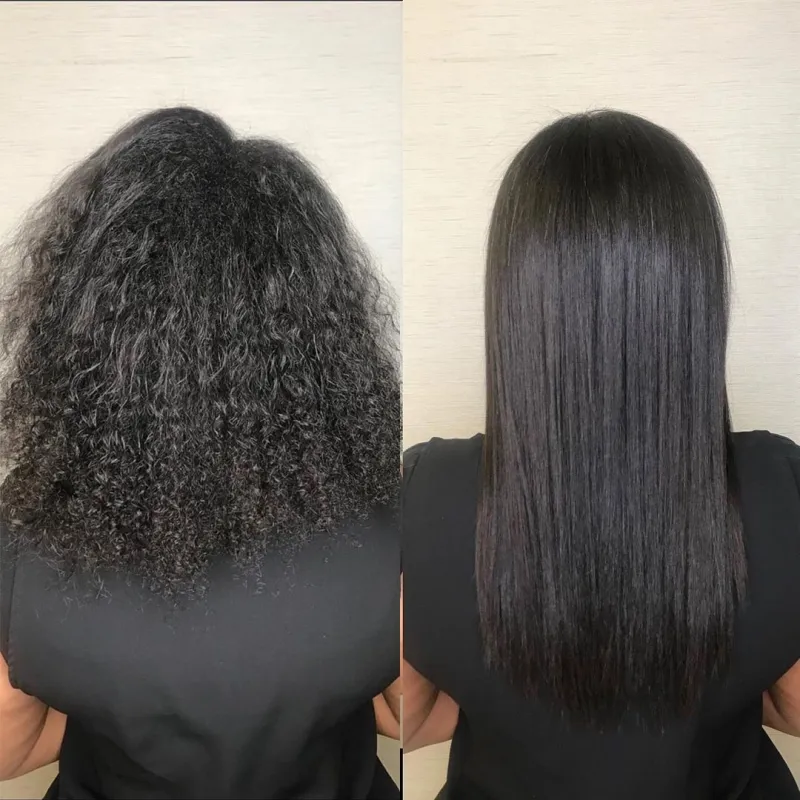
Photo: hair keratin smoothing treatment salon professional styling, via cdn.accentuate.io
Let's be honest about something: American hair is tired. Between the daily blowouts, the flat irons, the chemical color treatments, and the humidity that undoes all of it by noon—a lot of us are walking around with hair that's technically styled but quietly suffering. The breakage, the frizz, the dullness, the split ends that never seem to stop splitting—it's a cycle most of us have just accepted as part of life.
Keratin treatments have been positioned as the answer to this problem for well over a decade. And in many cases, they help—at least temporarily. But if you've ever walked out of a salon with silky-smooth hair only to find it back to its old tricks six weeks later, you already know that not all keratin treatments are created equal. What most American salons are offering is a surface fix. What Turkish keratin techniques deliver is something fundamentally different.
The Problem With How We've Been Doing This
Standard keratin treatments in the US—the kind you'll find at most mid-range and even high-end salons—work by coating the hair shaft with a keratin-based formula and then sealing it in with high heat. The result is smooth, shiny, manageable hair. For a while.
The issue is that many of these formulas rely on formaldehyde or formaldehyde-releasing chemicals to create that bond, which has raised legitimate health concerns. Even the formaldehyde-free versions often use alternative aldehydes that aren't necessarily gentler on the hair fiber itself. Over repeated applications, the hair can become dependent on the treatment to look good, while its natural protein structure continues to degrade underneath.
This is the cycle: you get a keratin treatment to fix damage, the treatment causes more damage over time, so you need another treatment to manage it. Sound familiar?
What Makes Turkish Keratin Techniques Different
Turkish salon culture has a long tradition of treating hair as something to be genuinely restored, not just temporarily tamed. The approach to keratin smoothing that's been refined in Turkish salons over the past two decades reflects that philosophy in several concrete ways.
First, the formulas. Turkish keratin treatments tend to use a higher concentration of hydrolyzed keratin proteins—smaller protein molecules that can actually penetrate the hair shaft rather than just sitting on top of it. This means the treatment is working from the inside of the hair fiber outward, rebuilding structural integrity rather than just creating an illusion of smoothness.
Second, the conditioning agents. Turkish formulas typically incorporate nourishing oils—argan, olive, and sweet almond oil are common—that work alongside the keratin to restore moisture balance. This matters because one of the biggest causes of long-term heat damage is moisture loss, and most standard keratin treatments don't address that directly.
Third, and this is the part American salons often skip: the application process is slower and more deliberate. Turkish keratin treatments are applied in sections, allowed to fully absorb before heat is introduced, and processed at lower temperatures for longer periods. The result is deeper penetration and a more lasting bond—without the aggressive heat exposure that compounds damage over time.
The Humidity Factor (This One's for You, Florida)
One of the most common complaints American women have about keratin treatments is that they don't hold up in humidity. You get the treatment, you're thrilled for three weeks, and then a single August afternoon in Atlanta turns your hair back into a frizz cloud.
This is largely a formula problem. Treatments that coat the hair shaft rather than penetrating it are more vulnerable to moisture intrusion—when humidity gets into the hair, it pushes that surface coating off and the frizz comes back.
Turkish keratin treatments, because they work deeper into the hair fiber, tend to hold up significantly better in humid conditions. The smoothing effect is more durable because it's more integrated with the hair's actual structure. For American women living in high-humidity climates—the South, the Pacific Northwest, coastal cities—this is a meaningful practical difference, not just a marketing claim.
What to Ask For (and What to Avoid)
If you're curious about trying a Turkish-style keratin treatment, the conversation with your stylist matters. Here's what to look for:
Ask about the formula. A quality Turkish-inspired treatment should contain hydrolyzed keratin (look for molecular weight specifications—lower molecular weight means better penetration), nourishing oils, and should be explicitly formaldehyde-free without relying on glyoxylic acid as a substitute.
Ask about application time. If a stylist tells you the whole process takes under an hour, that's a red flag. A properly applied treatment needs time to absorb. Expect two to three hours for a thorough application.
Ask about heat settings. Lower and slower is better. Flat iron temperatures above 450°F during keratin application are a sign that the formula needs extreme heat to work—which usually means it's not penetrating deeply enough on its own.
Ask about aftercare. Turkish keratin treatments typically come with specific aftercare recommendations involving sulfate-free shampoos and occasional protein-boosting masks. A stylist who doesn't mention aftercare probably isn't working with a formula that requires it—which tells you something about its depth.
The Long Game
Here's the real pitch for the Turkish approach: it's not about getting perfect hair for six weeks and then starting over. It's about gradually improving your hair's health over multiple treatments so that, eventually, you're relying on the treatment less, not more.
That's a fundamentally different value proposition than what most American keratin marketing offers. Instead of selling you a temporary fix, the Turkish philosophy is about restoration—giving your hair back what years of heat styling and chemical processing have taken from it.
At Zeytin Beauty Lounge, this is exactly the kind of approach we believe in. The same way Turkish skincare focuses on long-term skin health over quick results, Turkish hair care is built around sustainability. Your hair should get better with time, not just look better for a few weeks.
Is It Worth It?
If you're currently spending money on deep conditioning treatments every month, buying multiple smoothing products to manage frizz, and still not happy with how your hair looks and feels—yes, it's worth exploring a Turkish keratin treatment as an alternative. The upfront investment is comparable to a standard salon keratin, but the long-term payoff in hair health and reduced dependency on styling products makes it genuinely cost-effective over time.
America's heat damage crisis isn't going to solve itself. But it can absolutely be addressed—one well-formulated, thoughtfully applied treatment at a time.