Smoke, Drama, and Depth: How Turkish Kohl Is Rewriting the Rules of American Eye Makeup
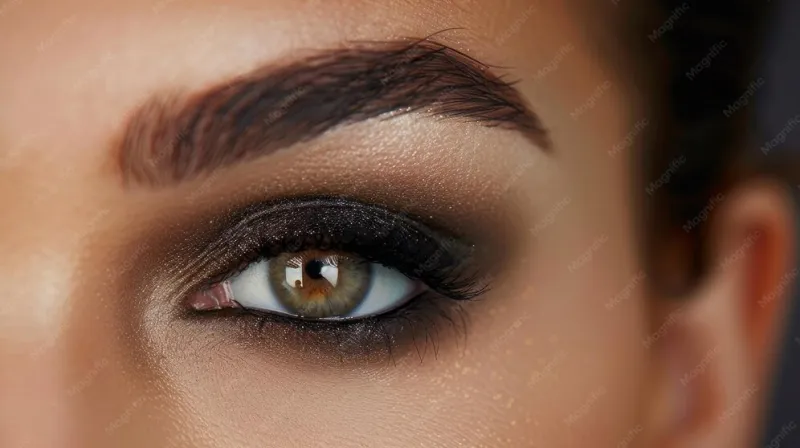
Photo: Turkish kohl eyeliner smoky eye makeup close up dramatic look, via img.freepik.com
There's a specific kind of eye look that stops you mid-scroll. It's not perfectly winged. It's not a precise cat-eye. It's smudged, deep, a little mysterious — and it makes whoever's wearing it look like they've lived an interesting life. That look has a name, a history, and roots that stretch back thousands of years into Turkish and broader Ottoman beauty culture. It's kohl, and it's everywhere right now.
At Zeytin Beauty Lounge, we've watched this trend build momentum for a while. What started as a niche appreciation for traditional beauty techniques has exploded into mainstream American makeup culture — and honestly, we couldn't be more here for it.
Kohl's Deep Roots in Turkish Beauty
Before it became a TikTok aesthetic, kohl was a staple of Ottoman-era beauty rituals. Historically, it was made from ground minerals — often galena (lead sulfide), antimony, or burnt almond shells — mixed with oils or animal fats and applied with a thin stick directly to the waterline and lash line. Both men and women used it, and it carried meaning beyond pure aesthetics: kohl was believed to protect the eyes from harsh sunlight, ward off evil spirits, and even carry medicinal properties.
In Turkish hammam culture, the preparation for a kohl application was its own ceremony. Skin was cleansed, brows were shaped (often by threading — another Turkish art form), and then the eyes were lined with deliberate, practiced strokes. The result wasn't the sharp, graphic liner we associate with Western eye makeup of the 1960s. It was softer, smokier, more lived-in — an enhancement of the eye's natural shape rather than a geometric exercise on top of it.
That philosophy is exactly what's resonating with American beauty lovers right now.
Why American Makeup Culture Is Obsessed Right Now
Let's be honest: the hyper-precise, Instagram-perfect makeup era has started to feel exhausting. The ruler-straight liner, the flawlessly blended contour, the "no-makeup makeup" that somehow requires 47 products — there's a growing appetite for something that feels more human, more expressive, more interesting.
Kohl delivers all of that. It's forgiving by design. The smudge isn't a mistake — it's the point. And in a beauty landscape increasingly shaped by authenticity and cultural appreciation, techniques with genuine historical depth are hitting differently than another synthetic trend born on a mood board.
On social media, creators from Turkish-American backgrounds have been instrumental in bringing authentic kohl application to wider audiences, sharing not just the how-to but the why — the cultural context that makes the technique meaningful rather than just another eye look to try. That storytelling element has resonated deeply, particularly with Gen Z beauty enthusiasts who want their routines to mean something.
The Kajal Technique: What Makes It Different
In Turkish beauty tradition, the kajal (or kohl) technique focuses on the waterline — the inner rim of the upper and lower lids — rather than the lash line. This is a significant distinction from the way most Americans were taught to apply eyeliner.
Lining the waterline creates an effect that's simultaneously more intense and more natural-looking than a standard liner stroke. It makes the lash line appear denser without looking drawn-on. It adds depth to the eye without adding a hard edge. And when a small amount is smudged outward along the lower lash line, it creates that signature smoky softness that's become the defining visual of this trend.
The tools matter too. Traditional kohl was applied with a smooth, rounded stick — not a brush, not a pencil. Today, the closest equivalents are soft kajal pencils or kohl pencils, which differ from standard eye pencils in their texture: they're creamier, more pigmented, and designed to smudge rather than stay put. Brands like NYX, Bobbi Brown, and Urban Decay all make solid options, and the market for authentic kajal formulations has grown significantly as demand has increased.
Adapting the Look for Different Eye Shapes and Skin Tones
One of the most exciting things about the Turkish kohl technique is how adaptable it is — which is a big reason it's connecting with such a diverse range of American beauty enthusiasts.
For almond-shaped eyes: The full waterline application with a slight outer smudge is incredibly flattering. Don't overthink it — just line, smudge gently, and let the eye shape do the work.
For round eyes: Focus the kohl on the outer two-thirds of the waterline rather than the full rim. This elongates the eye and adds a subtle lift without making the eye appear smaller.
For hooded eyes: Skip the lower waterline and concentrate on the upper lash line with a smudged brush, bringing a little darkness into the crease. The depth reads beautifully even when the lid isn't fully visible.
For monolid eyes: Kohl is genuinely magical here. A generous application on both waterlines with a smudge along the upper lash line creates incredible dimension without relying on crease techniques that don't translate to monolid anatomy.
As for skin tone — kohl is one of the most universally flattering eye techniques in existence. Classic black works across every complexion, but deep brown kohl on lighter skin tones creates a softer, almost antique-feeling depth. On deeper skin tones, rich black kohl pops with extraordinary intensity. Some Turkish beauty traditions also use deep navy or forest green kohl for variation, and these shades are having their own moment right now.
Wearing It Your Way
What we love most about the kohl revival is that it refuses to be prescriptive. You can wear it with an otherwise bare face and look effortlessly striking. You can layer it under a dramatic shadow look for something more editorial. You can smudge it heavily for maximum drama or apply it lightly for a subtle definition that reads as "I woke up looking like this."
At Zeytin Beauty Lounge, our makeup artists approach kohl application the way Turkish beauty tradition always has — as an enhancement of your individual features, not a template to conform to. Every eye is different. Every face tells a different story. The kohl just helps tell it a little more boldly.
If you haven't experimented with this look yet, now is genuinely the perfect moment to start. Grab a soft kajal pencil, find your waterline, and embrace a little intentional imperfection. Thousands of years of Turkish beauty wisdom agree: sometimes the smudge is exactly right.