Slow Down to Glow Up: What the Turkish Salon Experience Teaches Us About Better Beauty
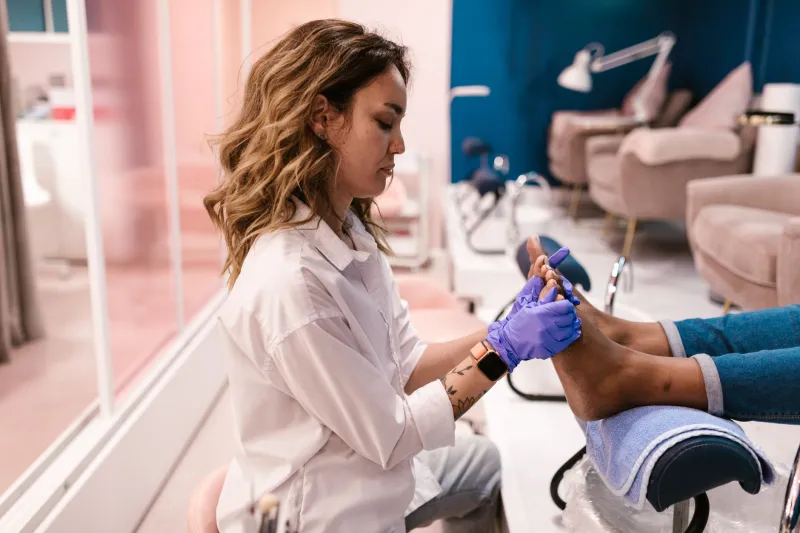
You've probably done it. You've sat in a salon chair, half your hair still dripping, while your stylist is already glancing at the door — mentally prepping for the next client. You leave feeling like you got the express version of what you actually needed. Your blowout looks fine. But fine isn't what you came for.
In Turkey, that scenario would be almost unthinkable.
Turkish salons — from the neighborhood spots in Ankara to the polished lounges in Istanbul — operate on a philosophy that most American beauty businesses have quietly abandoned: that the time spent on a client is part of the service itself. Not a cost to minimize. Not a scheduling inconvenience. A feature.
And it turns out, that philosophy produces measurably better outcomes.
It's Not Just About Being Nice — It's About Being Thorough
The difference between a rushed appointment and a relaxed one isn't purely emotional. It's technical.
When a stylist has time, they assess. They run their fingers through your hair before reaching for a single product. They look at your scalp under good lighting. They ask about your water at home, your sleep schedule, what you've been eating. Turkish beauty professionals are trained to treat the whole picture — not just the surface presenting itself in their chair.
In the US, the average salon appointment for a cut and blowout is booked in 45-minute to 60-minute windows. In many Turkish salons, that same appointment might stretch to 90 minutes or more, not because the stylist is slow, but because the process includes consultation, scalp care, a proper treatment rinse, and a genuine conversation about what your hair actually needs.
That extra time isn't padding. It's precision.
The Psychology of Feeling Unhurried
There's real science behind why a relaxed appointment produces better results — and it starts with you, not your stylist.
When clients feel rushed, they tense up. Literally. Tension in your scalp affects blood flow. Stress hormones interfere with how your skin and hair respond to treatments. You're less likely to communicate clearly about what you want, which means your stylist is working with incomplete information.
Contrast that with the Turkish salon environment, where tea is offered before the consultation even begins. Where you're not checking the time. Where the stylist's body language signals that this hour (or two) belongs entirely to you.
That psychological shift changes the entire experience. Clients open up. Stylists listen more carefully. The result is a service that's actually tailored — not templated.
The Appointment Quota Problem
American salons aren't staffed by uncaring people. The issue is structural. Many stylists in the US are booth renters or commission-based workers who depend on volume. More appointments per day means more income. The incentive to rush is baked into the business model.
Turkish salons — particularly the traditional ones — have historically operated differently. The relationship between a client and their regular stylist in Turkey is often long-term, almost familial. Loyalty is the currency, not turnover. A stylist who rushes you loses you. And losing a regular client in a community-oriented culture carries real social weight.
This doesn't mean every Turkish salon is a sanctuary of slowness. But the cultural baseline expectation is different, and that shapes how stylists are trained and how businesses are run.
What You Can Actually Do About This
You can't transplant Istanbul into your local strip mall. But you can make intentional choices that shift your experience closer to the Turkish model.
Book the first appointment of the day. Early slots are less likely to be affected by a backed-up schedule. Your stylist starts fresh, unrushed, and fully present.
Ask for a consultation before your service. Even five extra minutes to talk through your hair concerns before the water runs changes the dynamic entirely. A good stylist will welcome it.
Find salons that limit their daily bookings. This is a green flag. It signals that the business values depth over volume. Boutique salons and independently operated lounges are more likely to offer this.
Say something. It sounds simple, but clients rarely advocate for themselves. If you feel rushed, it's okay to gently say, "Can we slow down a little? I want to make sure we get this right." Most stylists will respond positively.
Tip for time, not just results. In cultures where the slow approach is valued, clients signal that value financially. If a stylist takes the time to really work with you, acknowledge it.
What the Zeytin Approach Looks Like in Practice
At Zeytin Beauty Lounge, the Turkish philosophy of intentional service isn't a marketing angle — it's a practical commitment. Every appointment starts with a real conversation. We want to know what's been happening with your hair and skin since the last time you were in. We want to understand your lifestyle, your stressors, your goals.
That information changes what we do. It changes which products we reach for, how we approach your scalp, how we style the final result. It means you leave with something that actually works for your real life — not just something that looks good in the chair.
The Turkish concept of özen — roughly translated as care with attention — is the heartbeat of how we work. It's slower, yes. But slow here isn't a flaw. It's the whole point.
The Takeaway
The next time you're sitting in a salon chair feeling like a car moving through a wash, remember: speed is a choice the business made, not an inevitability. Better salons — the ones operating closer to the Turkish model — know that time is the one thing you can't fake your way through.
Your hair and skin respond to attention. So do you. And the results speak for themselves.