Why Your Concealer Is Aging You (And What Turkish Makeup Artists Do Instead)
You spent good money on that concealer. The reviews were glowing, the shade matched perfectly in the store, and you walked out feeling hopeful. Then, two hours into your day, you caught your reflection and noticed it — those little creases fanning out from the corners of your eyes, your concealer sitting in your skin rather than on it, somehow making you look more tired than when you started.
This is one of the most common complaints we hear at Zeytin Beauty Lounge, and the frustrating truth is that the concealer is rarely the culprit. According to traditional Turkish makeup philosophy, the real issue starts way before the product ever touches your face.
The Under-Eye Area Is Not Just Another Patch of Skin
Here's something American beauty culture tends to gloss over: the skin directly beneath your eyes is genuinely different from the rest of your face. It's thinner, drier, more delicate, and almost completely lacking in oil glands. That means it dehydrates faster, moves more with every expression you make, and absorbs product differently than your cheeks or forehead.
Turkish makeup artists — many of whom trained in Istanbul's famously rigorous bridal beauty scene — treat the under-eye area as its own category entirely. They don't approach it as a problem to cover up. They approach it as a zone that needs to be prepared, almost the way a painter primes a canvas before adding color.
When you skip that preparation and go straight to concealer, you're essentially putting pigment on a dry, uneven surface. The product has nowhere stable to sit, so it migrates into fine lines and creases the moment you smile, squint, or blink.
Why Heavy Coverage Is Working Against You
In the US, we tend to think more coverage equals better results. Darker circles? Add more concealer. Still showing through? Pat on another layer. This logic makes intuitive sense, but it's exactly what Turkish makeup artists push back against.
Thicker product means more weight. More weight means more movement. And more movement means deeper, more obvious creasing. A full-coverage concealer packed under the eye is essentially guaranteed to settle and crack by noon, especially if the skin underneath hasn't been properly hydrated first.
The Turkish approach flips this logic entirely. The goal isn't maximum coverage — it's strategic coverage that lets the skin breathe and move naturally. A little goes a long way when the foundation beneath it is right.
The Preparation Step Most People Skip Entirely
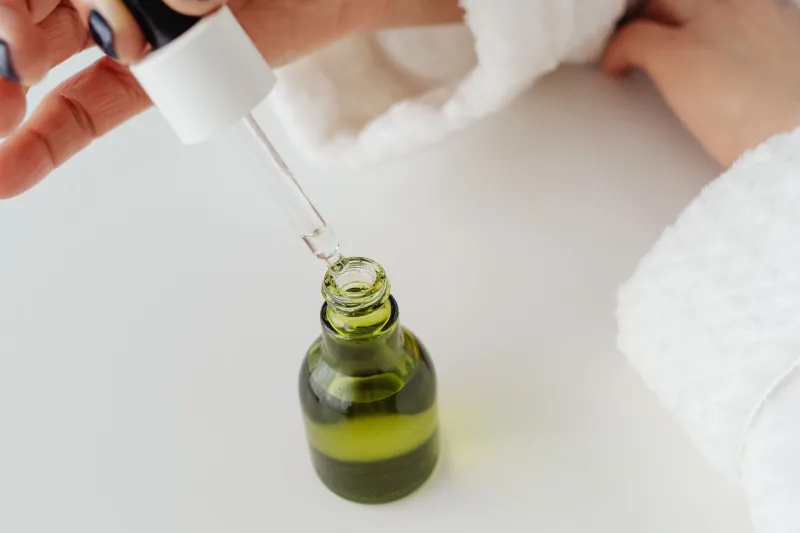
Before any product touches the under-eye area, Turkish makeup artists almost universally apply a hydrating eye cream or a small amount of lightweight facial oil — yes, oil — and give it time to fully absorb. We're talking a genuine five-minute wait, not a quick pat and move on.
At Zeytin, we've long been advocates for zeytin (olive) oil as a pre-makeup treatment, and the under-eye area is one of the places where this tradition really shines. A single drop of high-quality olive oil, gently pressed into the skin and allowed to sink in, creates a supple, slightly plump surface that concealer actually adheres to. The skin moves with the product instead of against it.
If oil feels too heavy for your skin type, a water-based eye gel with hyaluronic acid works on the same principle — you're adding back the moisture that the under-eye area is constantly losing, so the skin has enough flexibility to hold makeup without cracking.
The Right Order of Operations
Product order matters more under the eye than almost anywhere else on the face. Here's the sequence Turkish makeup artists typically follow, and it's probably different from what you're doing:
1. Hydrate first, always. Eye cream or a lightweight oil, applied and fully absorbed before anything else.
2. Set the moisture with a translucent powder — but only a tiny amount. This step surprises a lot of people. A very light dusting of finely milled translucent powder over the hydrated skin before concealer creates a base that keeps the product from slipping. Use a fluffy brush and a barely-there hand.
3. Apply concealer in thin layers. Use a small, dense brush or your ring finger (the weakest finger, which naturally applies the least pressure) to place concealer only where you actually need it. Don't drag it across the entire under-eye area — concentrate it at the inner corner and directly beneath the eye where darkness tends to pool.
4. Blend upward and outward, not downward. Pressing concealer down into the skin pushes it into fine lines. Gentle upward tapping motions lift the product and blend it into the skin above the eye area for a seamless finish.
5. Set again — but not with powder. Turkish makeup artists often finish with a very light mist of setting spray rather than more powder. Powder layered over concealer adds bulk and dryness, which accelerates creasing. A fine mist locks everything in place without adding weight.
Color Correction: The Step Worth Borrowing
For deeper circles or more pronounced discoloration, Turkish bridal makeup artists frequently use color correction underneath concealer rather than relying on heavier product. A peach or salmon-toned corrector (depending on your skin tone) neutralizes the blue or purple tones in dark circles so the concealer on top doesn't have to work as hard. Less product, better coverage, less creasing. It's a straightforward trade-off that American beauty culture has been slow to adopt outside of professional settings.
What to Look for in a Concealer (According to This Philosophy)
If you're shopping with Turkish makeup principles in mind, you're looking for a few specific things: a lightweight, skin-like texture rather than a thick, opaque paste; a formula that contains some level of hydration (look for ingredients like glycerin or hyaluronic acid); and a finish that's satin rather than matte. Matte concealers look beautiful in photos but tend to emphasize texture and dry out the under-eye area over the course of a day.
You don't need to spend a fortune. What you need is the right formula applied over properly prepared skin.
The Bigger Takeaway
Creasing concealer is almost never a product problem. It's a preparation and technique problem. Turkish makeup artistry has understood this for generations — that beautiful makeup starts with skin that's been respected and cared for before the first brush stroke. The under-eye area, more than anywhere else on the face, rewards that kind of attention.
Take five extra minutes before you reach for that concealer. Hydrate, wait, layer lightly, and watch what happens. Your under-eye area might just look better than it has in years — and you might find you're using half the product you used to.