Your Foundation Has Been the Wrong Color This Whole Time — And Turkish Makeup Culture Explains Why
Photo: Mikey Saltini, CC BY-SA 3.0, via Wikimedia Commons
If you've ever bought a foundation that matched your hand perfectly in the store but looked weirdly orange or gray by the time you got home, you're not imagining things. And you're definitely not alone. Undertone mismatch is one of the most common — and most frustrating — beauty problems in the US, and it stems from a systemic gap in how the Western makeup industry has traditionally approached complexion diversity.
Turkish makeup culture doesn't have this problem in the same way. Here's why that matters for your routine.
The Western Default and Why It Falls Short
For most of American beauty history, shade ranges were designed with a fairly narrow range of complexions in mind. Even as brands expanded their offerings in recent years, the language used to describe undertones — and the training given to makeup artists and beauty counter staff — often lagged behind.
The standard framework most American consumers learn is simple: warm, cool, or neutral. And while that's a starting point, it leaves out enormous nuance. It doesn't account well for olive undertones, which sit in their own distinct category. It doesn't capture the way undertones shift across different lighting. And it certainly doesn't reflect the reality of the many Americans with Mediterranean, Middle Eastern, South Asian, or mixed heritage complexions who don't fit neatly into that three-box system.
Turkish beauty professionals have been working with a far more layered understanding of complexion — one that's been shaped by centuries of cultural diversity across the region.
Why Turkish Beauty Culture Developed Such a Nuanced Approach
Turkey sits at a geographic and cultural crossroads. Over centuries, the region absorbed influences from Central Asia, the Mediterranean, the Middle East, the Caucasus, and North Africa. The result is a population with extraordinary complexion diversity — and a beauty culture that had to develop sophisticated tools to serve it.
Olive undertones, in particular, are deeply understood in Turkish professional beauty contexts. This isn't a secondary consideration or an afterthought category. It's a primary lens through which color work is approached. Turkish makeup artists are trained to identify the green, gold, and gray nuances that characterize olive skin — and to work with those undertones rather than covering them up or ignoring them.
At Zeytin Beauty Lounge, we see this play out constantly. Clients who have never had a foundation that looked truly right on them — who've spent years convinced they just have "difficult" skin — often discover that the issue wasn't their complexion at all. It was the framework being used to analyze it.
The Olive Undertone Problem
Let's spend a moment here because this is where most American beauty advice falls apart.
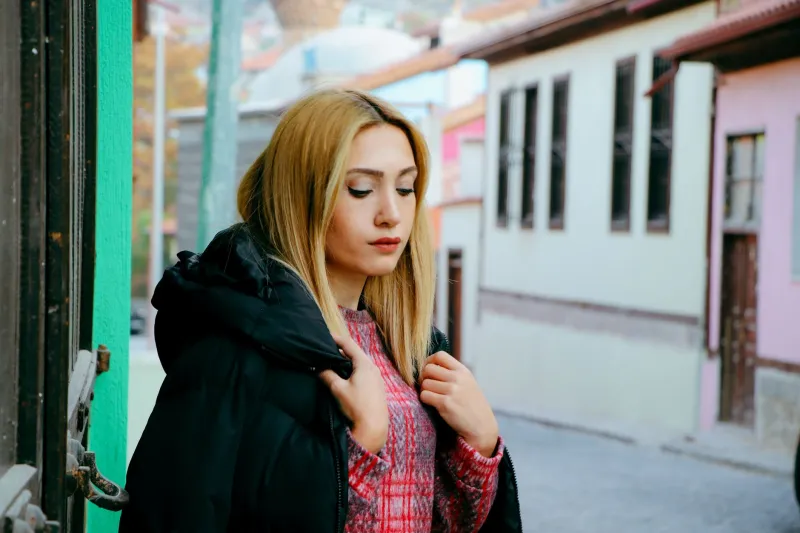
Olive skin is not simply "medium" or "warm-neutral." It has a distinct greenish or grayish quality to the undertone that means certain shades — particularly those with strong pink or yellow bases — will always look off. Foundations formulated for warm skin often read too golden or orange on olive complexions. Cool-toned foundations can look ashy or flat.
Turkish makeup tradition addresses this by looking at the undertone in layers: the base undertone (warm, cool, neutral), the secondary undertone (the specific cast — golden, peachy, rosy, olive, ashy), and how the two interact in different lighting conditions. This isn't overcomplicated — once you learn the language, it becomes intuitive. But it requires more than a three-step quiz on a beauty brand's website.
What This Looks Like in Practice
Here's what the Turkish professional approach to undertone analysis actually involves:
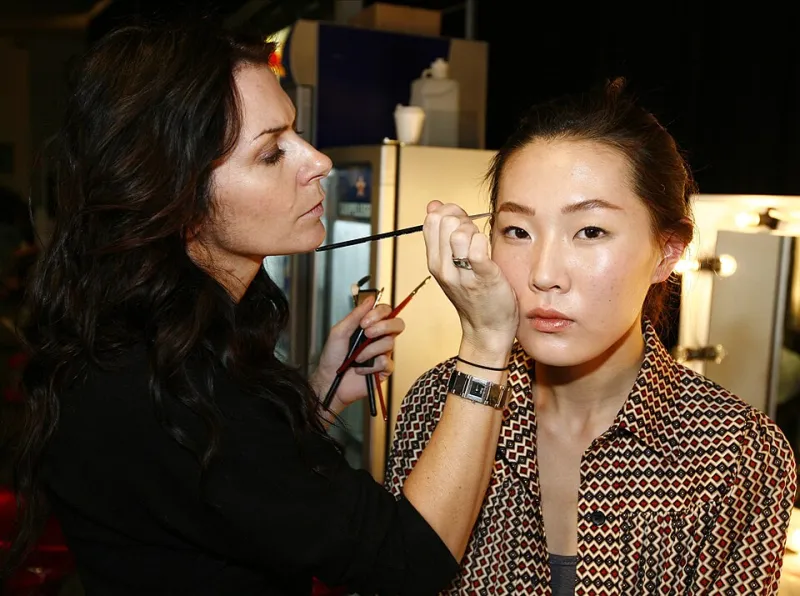
Natural light is non-negotiable. Store lighting is designed to flatter products, not your face. Turkish makeup artists consistently pull clients toward windows or use daylight-balanced lighting to make accurate assessments. If a beauty counter won't do this, that tells you something.
The neck and chest are part of the equation. Your face is not a separate object. Turkish pros routinely assess undertone across the jawline, neck, and upper chest to get a full picture — especially important since many people's faces are slightly different in tone from the rest of their body.
The vein test is a starting point, not a conclusion. You've probably seen the advice about checking your wrist veins (blue/purple = cool, green = warm). Turkish makeup training uses this as an initial indicator but never a final answer. Skin surface color, how the skin responds to sun exposure, and the client's own perception of what looks right all factor in.
Olive is its own category. Period. If you have olive skin and you've been trying to force yourself into warm or cool, that's your problem right there.
Why This Is Changing American Salons
The good news is that the American beauty industry is starting to catch up. Makeup artists who've trained with or been influenced by Turkish, Mediterranean, or Middle Eastern beauty traditions are bringing this more nuanced framework into their work — and clients are noticing the difference.
More importantly, clients who understand their own undertones are making better purchasing decisions. They're spending less money on foundations that don't work, asking better questions at beauty counters, and building routines that actually complement their natural complexion rather than fighting it.
At Zeytin Beauty Lounge, this is the kind of knowledge we want to put in your hands. Turkish elegance has always been about working with what you have — understanding it deeply, honoring it, and enhancing it on its own terms. Your undertone isn't a problem to solve. It's the starting point for everything that actually works.